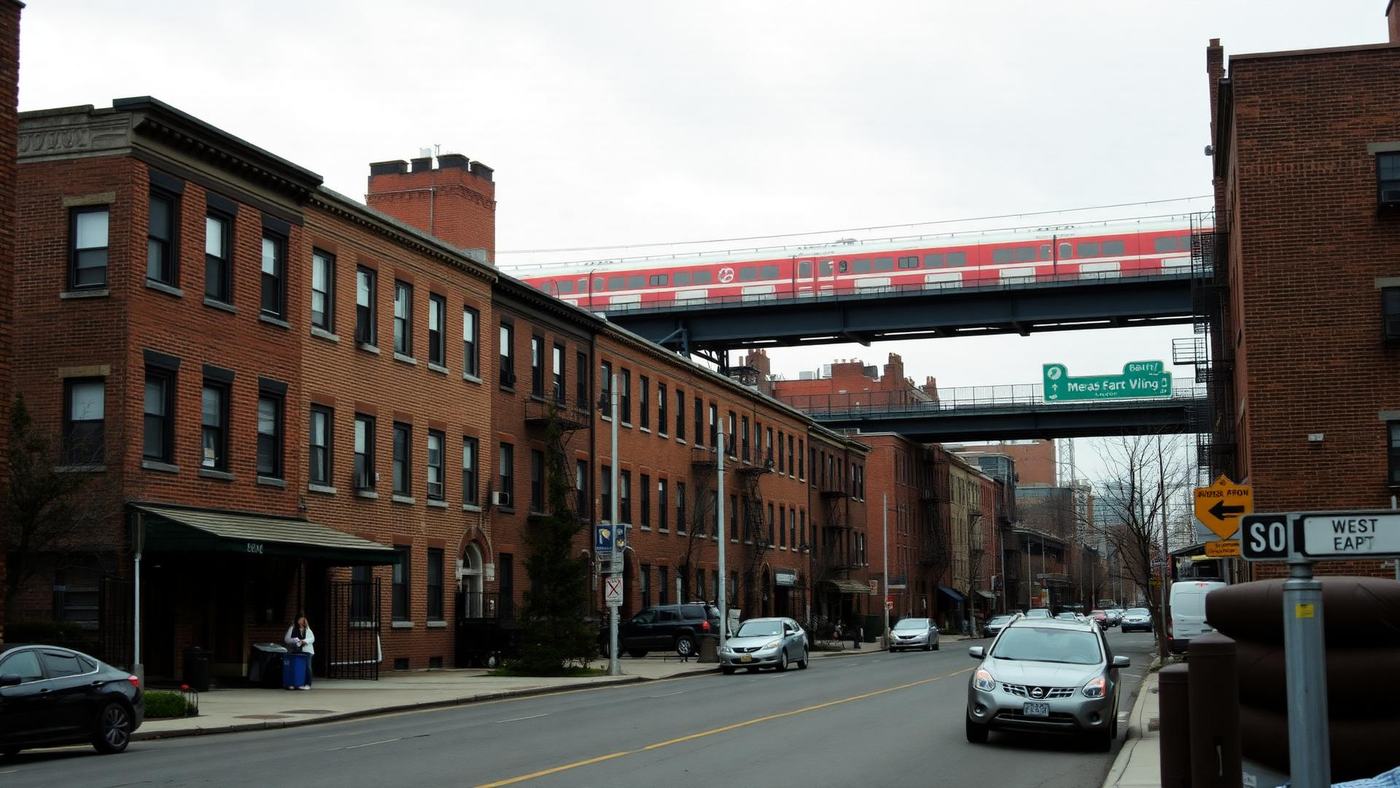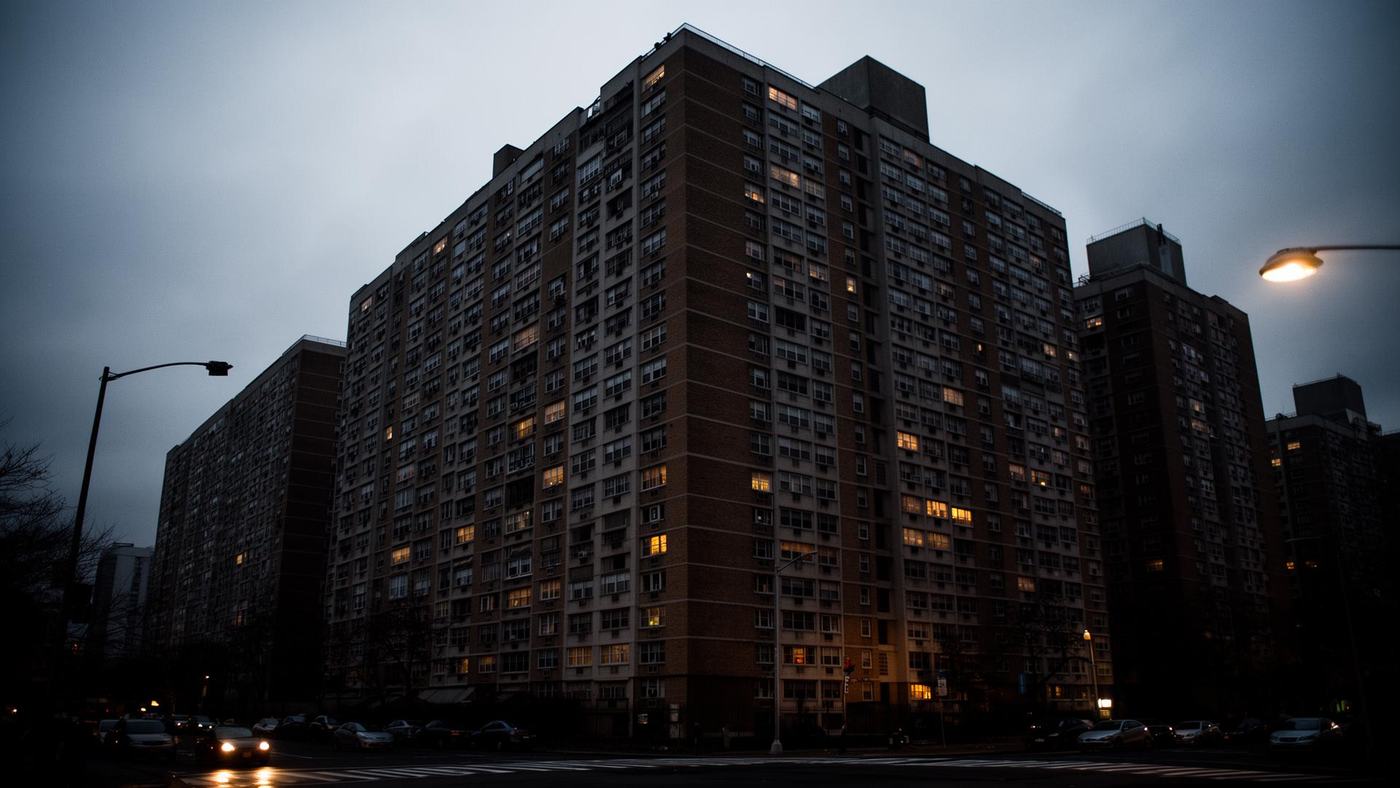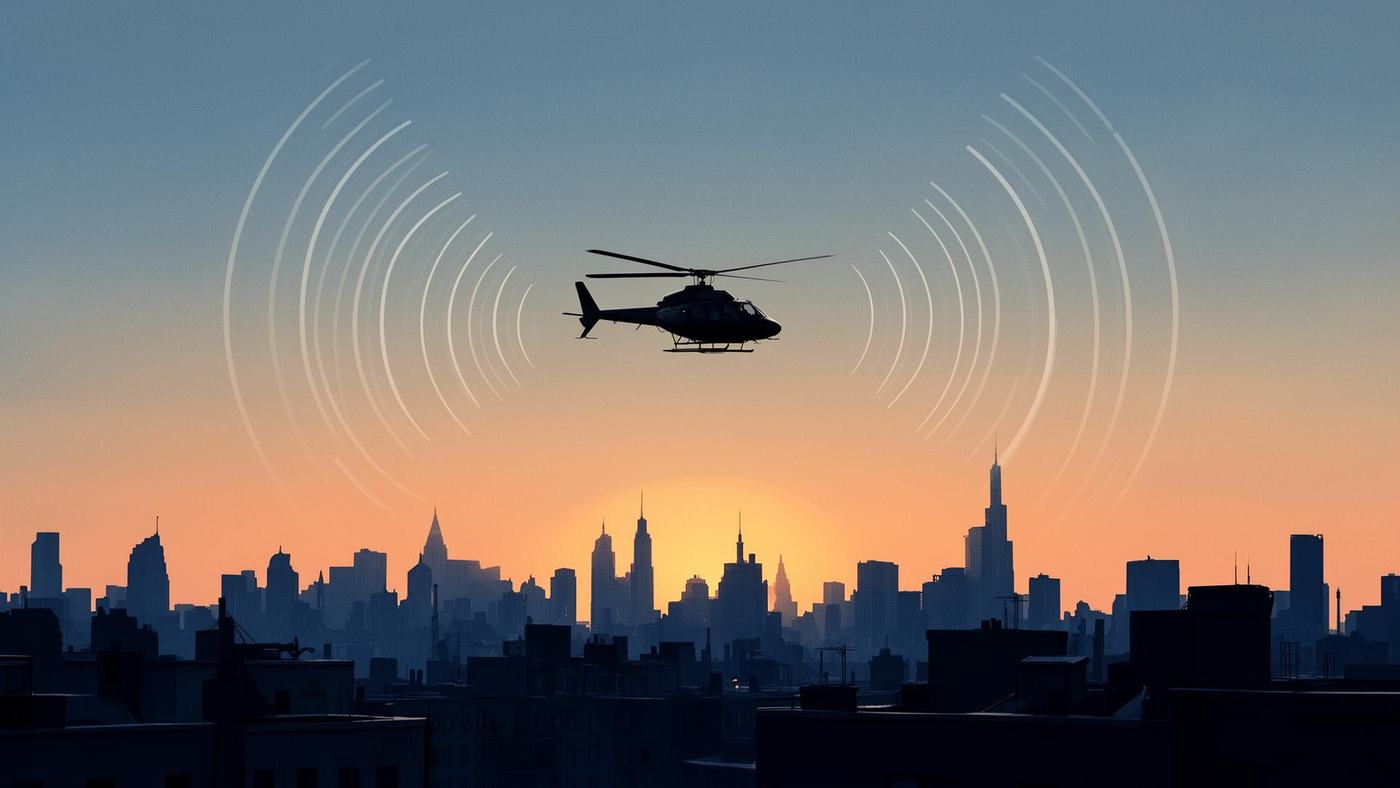
It's a Saturday in July, somewhere on the Upper East Side, and a sound comes through the window that you can't do anything about. Not a neighbor you can knock on. Not a super you can call. A helicopter, low over the river, and then another, and then the first one again on its way back. You don't know whose it is. You'll never know. So you do the only thing a person on the ground can do: you pick up the phone and dial 311.
Last year, New Yorkers did that 93,740 times.
Ask people what the city's loudest problem is and they'll say loud music, or construction, or the guy who revs his motorcycle at 2 a.m. They're not wrong: loud music and parties pull more 311 calls than anything else, by a mile. But one complaint has grown faster than any other in the city, and it's the one you can't argue with, can't fix, can't escape. It isn't on the street. It's in the sky.
You won't find that in any city report. The raw calls are public, but they land as a fire hose: every call, every agency, every cryptic descriptor, dumped into a spreadsheet built for analysts. Nobody ranks it, and nobody tells you which complaint is the one to watch. That's what Brix does: we take the city's raw record and turn it into an answer. So we went looking for the loudest thing nobody's tracking.
From 5,641 to 31,567 in three years
Here's the curve. It is not subtle.
- 2020: 5,641
- 2021: 15,027
- 2022: 13,443
- 2023: 31,567
- 2024: 16,663
- 2025: 9,482 (year-to-date)
A 460% jump from 2020 to the 2023 peak. Loud music grew over those years. Construction grew. Neither doubled — this quintupled. The line has fallen since, but 2025 is still running at nearly double where it started. Whatever happened up there, it didn't happen anywhere else in the data.
86% of the calls come from one borough
Helicopter noise doesn't fall evenly on the city. It falls on Manhattan.
- Manhattan: 80,747
- Queens: 7,355
- Brooklyn: 5,350
- Staten Island: 173
- Bronx: 115
Eighty-six percent of every residential helicopter complaint in our dataset comes from one borough. The map explains it: the East River and Hudson corridors are the tourist routes, the Wall Street and Midtown heliports anchor both ends, and the NYPD and news fleets circle the same sky. If you live along the water in Manhattan, the route runs over your roof.
The buildings doing the calling
A handful of addresses carry an outsized share. The ten residential buildings that call the most:
- 90-06 South Conduit Avenue, Queens — 4,101
- 208 East 28th Street, Manhattan — 3,200
- 214 West 102nd Street, Manhattan — 2,481
- 135 Eastern Parkway, Brooklyn — 2,304
- 718 Amsterdam Avenue, Manhattan — 2,292
- 258 West 22nd Street, Manhattan — 1,475
- 208 East 30th Street, Manhattan — 1,263
- 407 3rd Avenue, Manhattan — 1,090
- 300 Rector Place, Manhattan — 1,068
- 15 West 72nd Street, Manhattan — 1,038
Seven of the ten are in Manhattan; the other three sit under flight paths in Queens and Brooklyn. These aren't outliers shouting into the void. They're buildings under the exact route a helicopter took an hour ago, and an hour before that, and an hour before that — every window facing the wrong direction at once.
Who's actually up there
The descriptor field hints at who New Yorkers think they're hearing. Of all residential helicopter complaints:
- 91,792 — "Other." A tourist flight, a charter, a private commute. Something nobody on the ground could name.
- 1,008 — "NYPD."
- 940 — "News Gathering."
"Other" is doing 98% of the work. The single biggest source of helicopter noise in New York is a thing the city's own form has no word for.
Why most people never see this
That curve, that map, that list of buildings: none of it was readable anywhere. The city keeps every call as raw rows in a database built for people who write SQL, not for people deciding where to live next month. The information has always been public. It has almost never been usable.
You can't fix a helicopter from inside your apartment. You can't call the pilot. You can't knock on the sky. The only move a resident has ever had is to dial 311 and hope, 93,740 times and counting.
Methodology: figures are compiled by Brix from New York City public records — helicopter-noise complaints linked to a residential building, 2020–present. Citywide totals across all addresses are larger; 2025 figures are year-to-date. Verifiable for any address at getbrix.net.