In November, I stopped going on social media.
A friend had gone off a while before and told me she suddenly had time for everything else — that her mind wasn't as consumed with what other people were doing. I was so deep in the day-to-day that the things I'd wanted to build had quietly become things I only talked about. So I made a promise to myself: I couldn't go back on until I'd built one of them.
I'm writing this from the other side.
How I got there
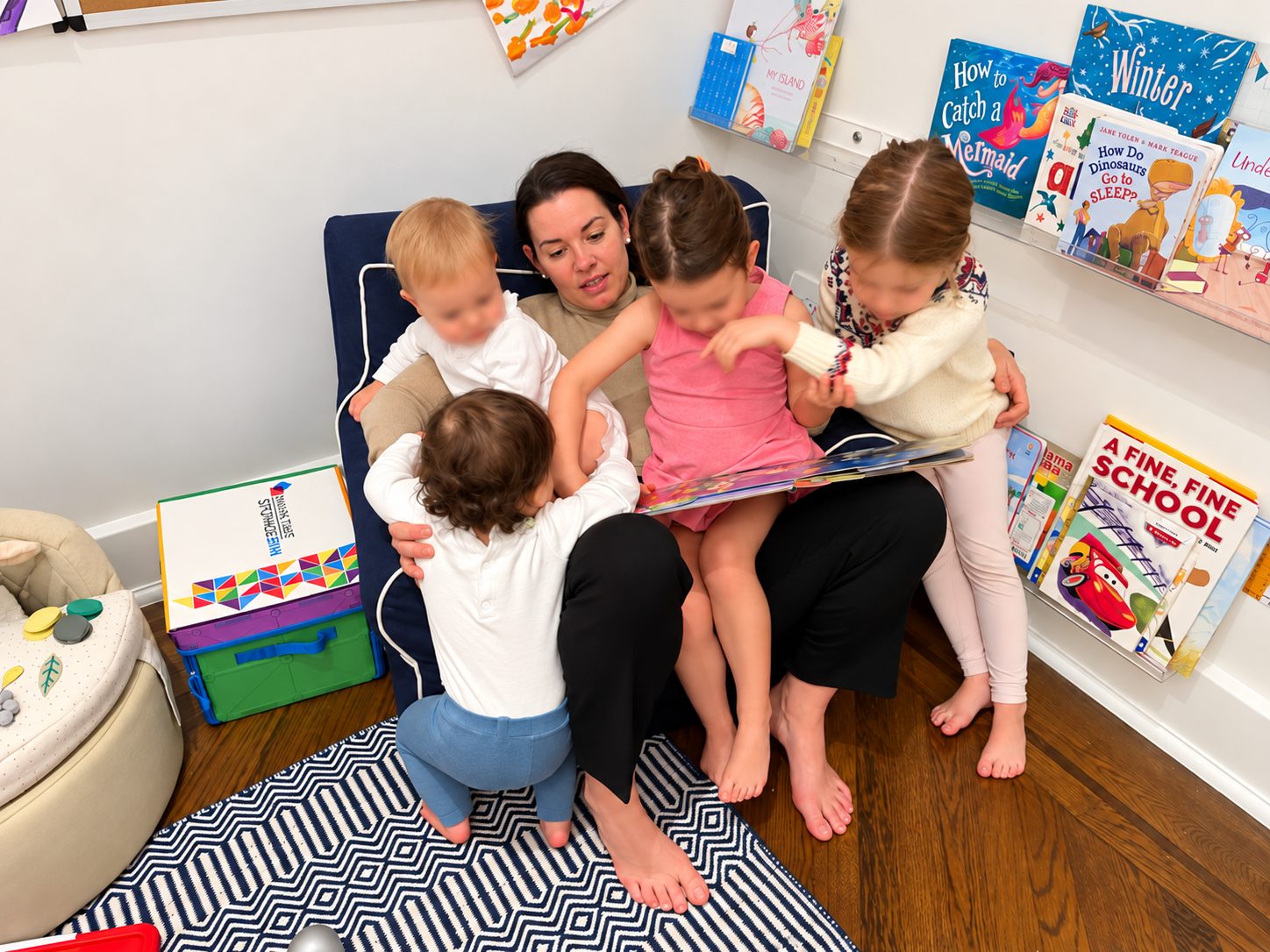
In 2021, I was a working mother of three-year-old twin girls, seven months pregnant with a second set of twins. I'm a twin myself — my mother's revenge — and no, I did not take the news calmly. We had just moved back to New York after riding out COVID elsewhere — a family of six on the way, returning to a city we'd been gone from for two years, trying to find somewhere to land before the babies came.
The first apartment we rented when we got back didn't work. The bedroom faced a major cross-town street — late-night ambulances, the endless beeping of trucks backing up — and the in-unit AC only amplified the noise. The whole place shook when the subway passed underneath, which was not the “lull-to-sleep” I had imagined. My husband saw a rat in the kitchen. Our upstairs neighbors' cigarette smoke kept seeping into the unit. I was about to give birth. We needed to move.
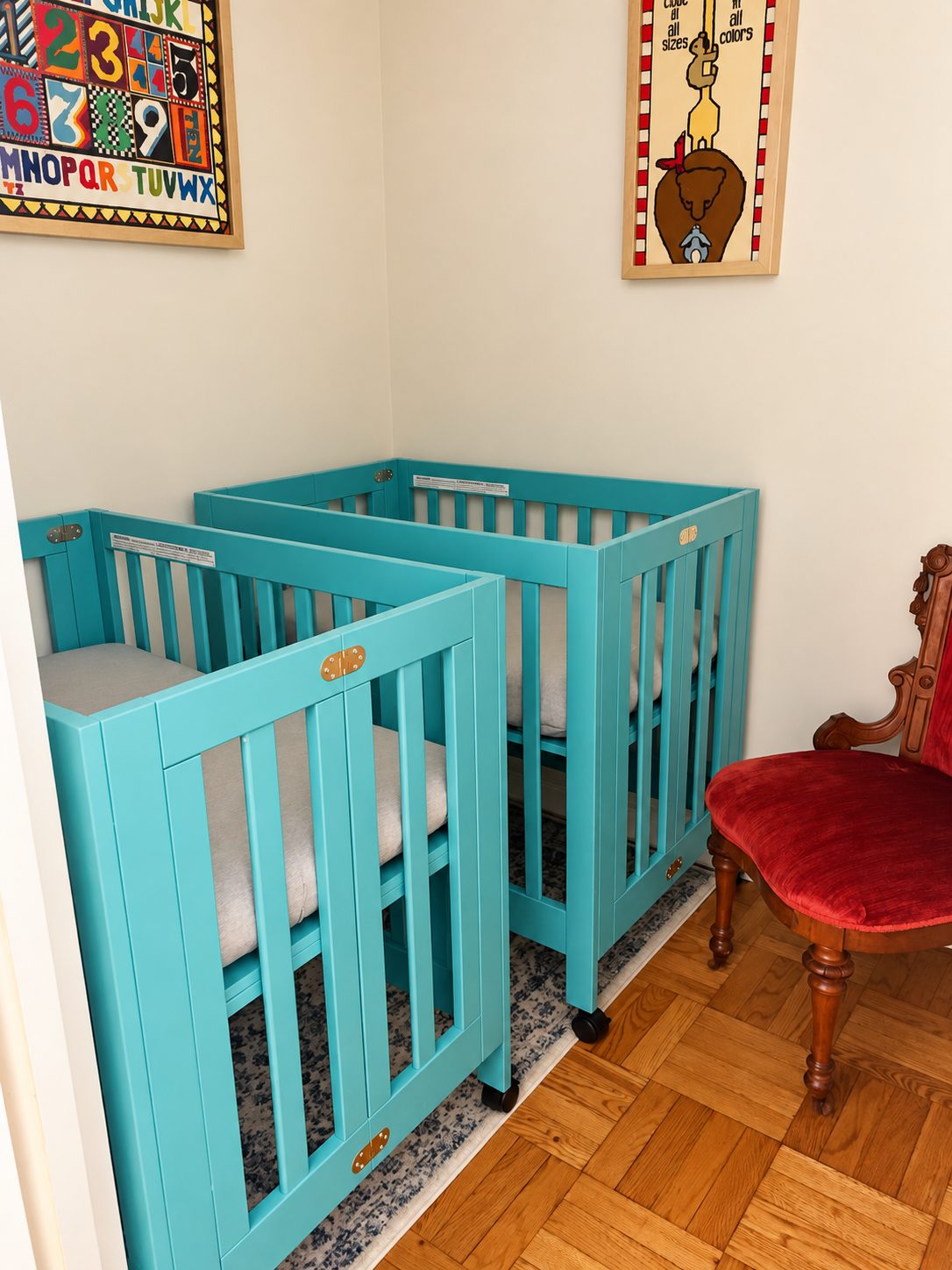
We went back to our old building — a two-unit apartment we knew — thinking we'd sort it out later. The babies came. I built a makeshift nursery in the corner of our bedroom with fake walls, just enough room for two mini cribs, crammed next to each other. It was tight. My super thought I was nuts, but I was desperate.
Four kids under four, in a space meant for half that. We started looking again.
When the babies were three months old, that winter, we moved into what looked like a beautiful apartment.
The first night, the heat didn't work. I slept with one of my babies on my chest to keep him warm, crying to my husband. Did we make a mistake moving here? Again?
A few weeks in, one of my three-year-old daughters woke up with a cockroach in her crib. She's an animal lover and begged us to keep it, so instead of smashing it, I put it in a box until she was asleep and carried it outside, hoping it wouldn't find its way home. It did. Or a cousin did. The cockroaches, I think, knew about all the lovely leaks and water this apartment had on offer. We didn't — not yet.
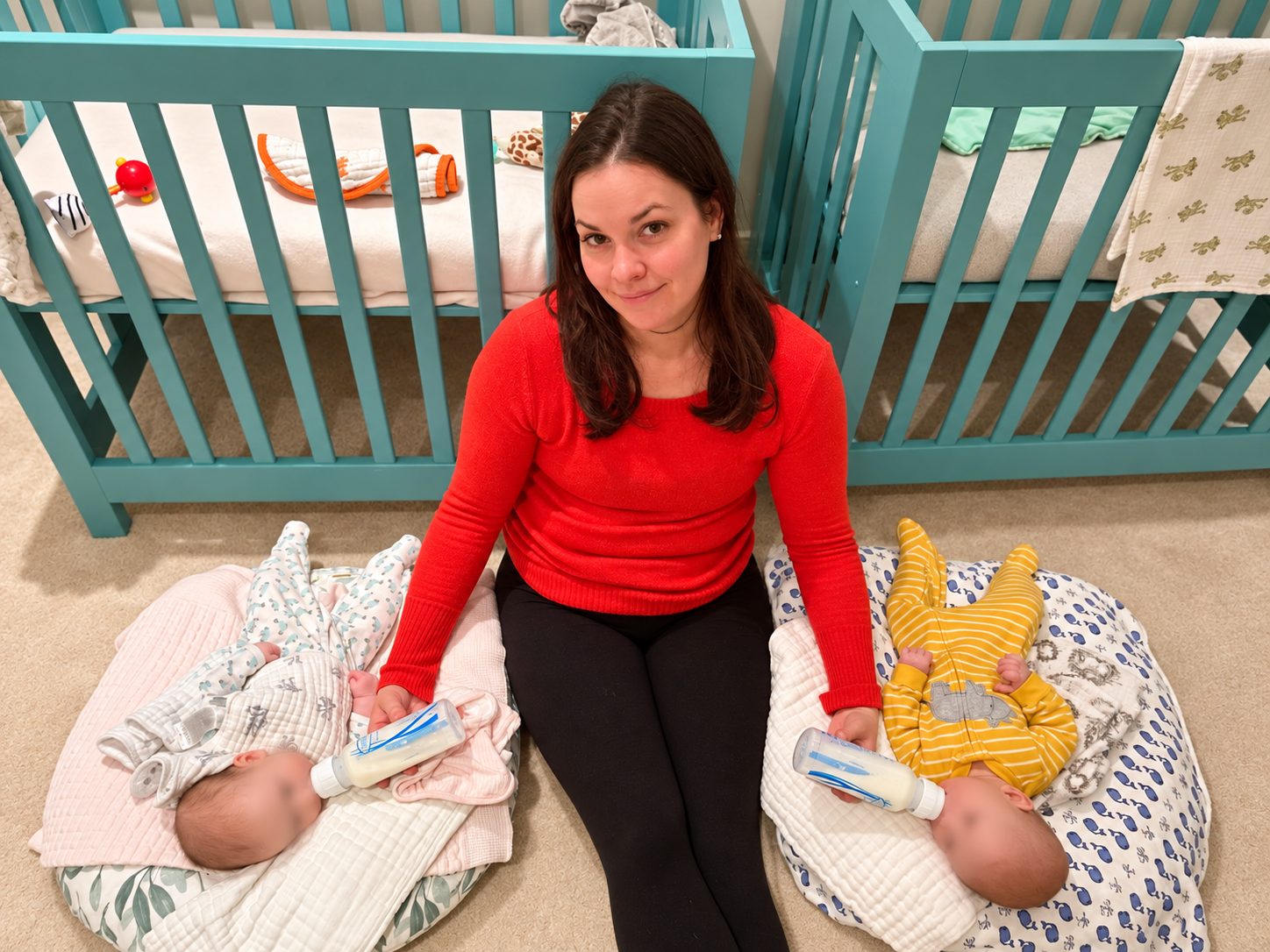
The leaks started in the nursery. Water ran down the walls constantly. We rearranged the cribs more than once trying to find a dry corner. My babies even slept in my closet for a few days. Then one morning I was getting ready for work and heard a loud boom — the ceiling in the family room had collapsed. No surprise, in hindsight: that room was right under the nursery, and the leak had traveled. Fortunately no one was under it, but I was at my end. We were paying full rent the whole time — for heat that didn't work, a nursery we couldn't use, a family room with a ceiling on the floor.
Eventually I talked to the man who ran the business downstairs. He also had leaks and heat that didn't work. A neighbor who had rented there before us said the same thing. The landlord never fixed anything. Leaks, heat, mold. The same things, with the same person, going back years. That was the real deal-breaker — not that things broke, but that nobody was ever going to fix them. All of it had already happened before we signed, and none of it showed on the day we toured it: this was a lovely apartment on a great block.
A bad building doesn't look bad from the sidewalk. It looks like fresh paint and the life you imagine living there. You fill in the rest, because you want it to work.
What I remember most clearly is the thought I had standing in my kitchen after that conversation — a kitchen so cold we'd put in a portable standing heater and a wall heater, because the original radiator barely kept your hands warm. How did I not know this? How did I not think to check?
We spend ten minutes reading the ingredients on a yogurt before giving it to our kids. We wait in line 30 minutes for a slice of pizza or a bagel. We jump through hoops researching schools for our children. We'll obsess over the exact subway route that saves us four minutes. Then when it comes to the biggest thing — the actual walls we live behind, the place we call home — we take a 20-minute tour on a sunny day with a smiling broker, and sign. I had never once thought to ask what had happened in that building before I moved in.
The honest answer was: there was no easy way to check. All of it had been in city records — spread across city and state agencies, in systems that are clunky and nearly impossible to navigate. As a working mother of four kids under four, I had no time to teach myself which one held what. I didn't have time to do the laundry.
That was when the first version of Brix started forming in my head.
What it is
Brix is a building history report for New York City apartment buildings. You type in any address — your apartment, the place you almost signed a lease on, your friend's building, the one you walk past every day — and you see what's actually happened there. Bed bug filings. Heat outages going back years. Mold complaints. Rodent reports. Department of Buildings (DOB) permits. HPD violations and housing court cases. Even the 311 noise complaints that show which parts of the block stay loud at night. And what the block itself is like — the 311 calls, what actually happens on that street at 2am. All of it in plain English, in one place.
And if you're buying, Brix goes one layer deeper: the apartment itself. Every violation, complaint, and renovation permit filed on your specific unit — so you see whether Apartment 4B has its own mold history, not just the building's, and whether that “gut renovated” in the listing has permits behind it, or just a new backsplash and cabinets. Who owned the apartment before you, what they paid, when they sold — closed co-op and condo sale prices, straight from city property records.
We had good years in that apartment. Christmases, first steps, epic games of hide and seek, the first bone I ever broke — a pinky. It wasn't a bad place to live. It just had things wrong with it that nobody told us about, and nobody ever fixed. That's the premise of Brix: not a perfect building — no such thing — but knowing what's wrong before you sign, and deciding whether it's something you can live with. Brix tells the truth behind the bricks and on the block.
The landlord already knows what's wrong with the building. So does the owner. The only person walking in blind is the one signing. That's the part we're fixing.
Today
Today I'm telling people Brix exists. If you live in New York, or you're moving here, or you almost moved here once and dodged it — type an address into getbrix.net. Try your building. Try the place you almost rented or bought. Try your best friend's apartment. Try your worst friend's apartment. See what comes up.
If you find something that surprises you, tell me. If you find something wrong, tell me that too — the data comes from city records and the records aren't perfect. If you find something funny, definitely tell me — the best ones are going on our socials. Brix is going to get better quickly.
As of today, I'm back on the apps — with guardrails. Nine months taught me I'd rather spend the time on Brix, or with my family, than on scrolling. Though I did miss Instagram. I have a lot of kitchen renovations to catch up on.
My daughter still asks about the cockroach. I tell her it moved with its cousin to a better building.