
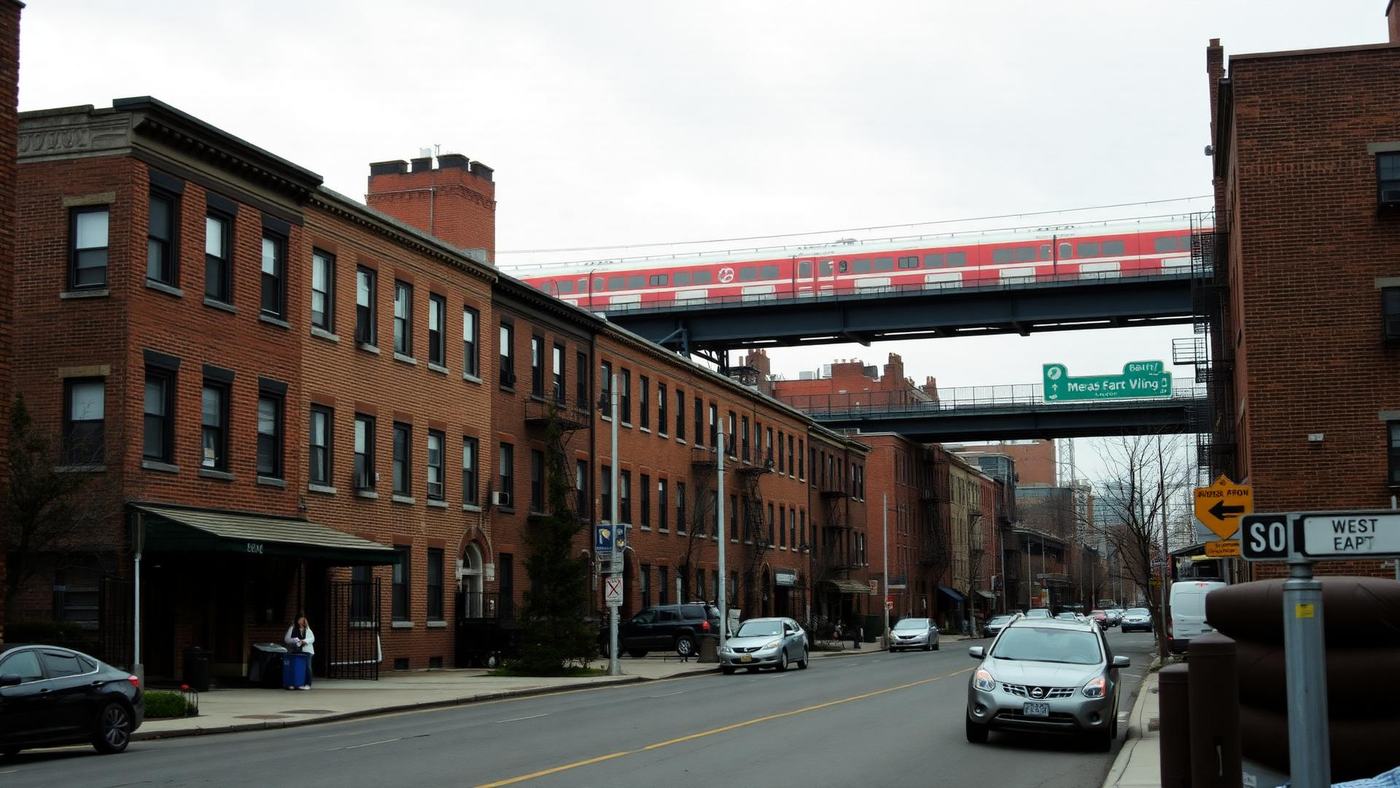
The site
On July 17, the Mamdani administration issued an RFP for a city-owned parcel at 2453 2nd Avenue, near the corner of East 125th Street. The proposal calls for roughly 140 units of affordable housing, delivered through the "B-East" pipeline — a package of small and mid-size sites the city wants moved without waiting on omnibus rezonings.
It's a good site on paper: two blocks from the 4/5/6 at 125th, one from the Second Avenue subway extension, and a short walk from the Metro-North station. It also sits in one of the most heavily-called, heavily-inspected corridors in Manhattan. Both things are true at the same time.
The immediate footprint
Within a 250-meter radius of 2453 2nd Avenue — roughly two blocks in every direction — the public record looks like this:
Grades across those 40 buildings split roughly in half: 25 are in A range, 10 in B or C range, and 6 are D or F. That's not a distressed neighborhood; it's a mixed one, with a small cluster of buildings pulling the average down.
The two buildings enrolled in HPD's Alternative Enforcement Program are the tell. AEP is the city's most intensive intervention short of receivership — it's reserved for buildings with sustained, unresolved conditions. Two on a two-block radius is above the Manhattan baseline.
What neighbors have been calling about
311 calls in the last 12 months from the surrounding blocks, top categories:
Rodents are the standout. Nearly 300 calls in a year on a footprint of forty buildings is the shape of a neighborhood-scale problem — commercial trash at street level, restaurant refuse on 125th, MTA infrastructure — not a single-building failure. The last citywide rodent mitigation pilot on 125th expired in 2024 and hasn't been renewed.
Heat and hot water calls are elevated but not extreme. Noise concentrates near the elevated 125th commercial spine, which is what you'd expect. What the city's RFP won't tell a future tenant is that when their unit gets built, day one will land in the middle of these baselines — not below them.
Why any of this matters for the RFP
The city's own Rental Ripoff report — released just five days before this RFP — made the case that HPD, DOB, and the Department of Health can't currently see the same landlord across LLCs, and that a third of self-certified violations were never actually fixed. Any developer awarded 2453 2nd Ave is walking into a corridor where those enforcement gaps are already visible in the data.
Whichever bidder wins B-East will inherit two things at once: a fast-track approval path and a set of neighbors whose building records are already in the public file. The interesting question isn't whether 140 new units are needed — they are — but whether the operator selected has a track record in this footprint, or 30 blocks south, or somewhere else entirely.
Look up what's already on the block
Every building in that 250-meter footprint has a public record. If you live in East Harlem, or you're following the RFP, three practical things:
- Pull up your own building — or a building on the block — on Brix. The health check is free, and it lags city records by no more than a few days.
- The two AEP buildings near the RFP site are named in HPD's public list. If your building is on it, you have specific legal rights that most tenants don't know about.
- When B-East names a developer, look them up by portfolio — not by the shell LLC that will hold the site. The ownership chain is on the free page.
Full coverage of the RFP is at Bisnow .
Look up any building on the block
Violations, complaints, ownership chain, and neighbors' 311 calls — in plain English.
Free for every NYC address. No account required.
Tags: East Harlem · B-East RFP · Mamdani · Affordable housing · HPD · 311
Reporting from Bisnow (July 17, 2026). Building, violation, and 311 figures are Brix analysis of HPD, DOB, and NYC 311 open data within 250 meters of 2453 2nd Avenue, pulled July 21, 2026.