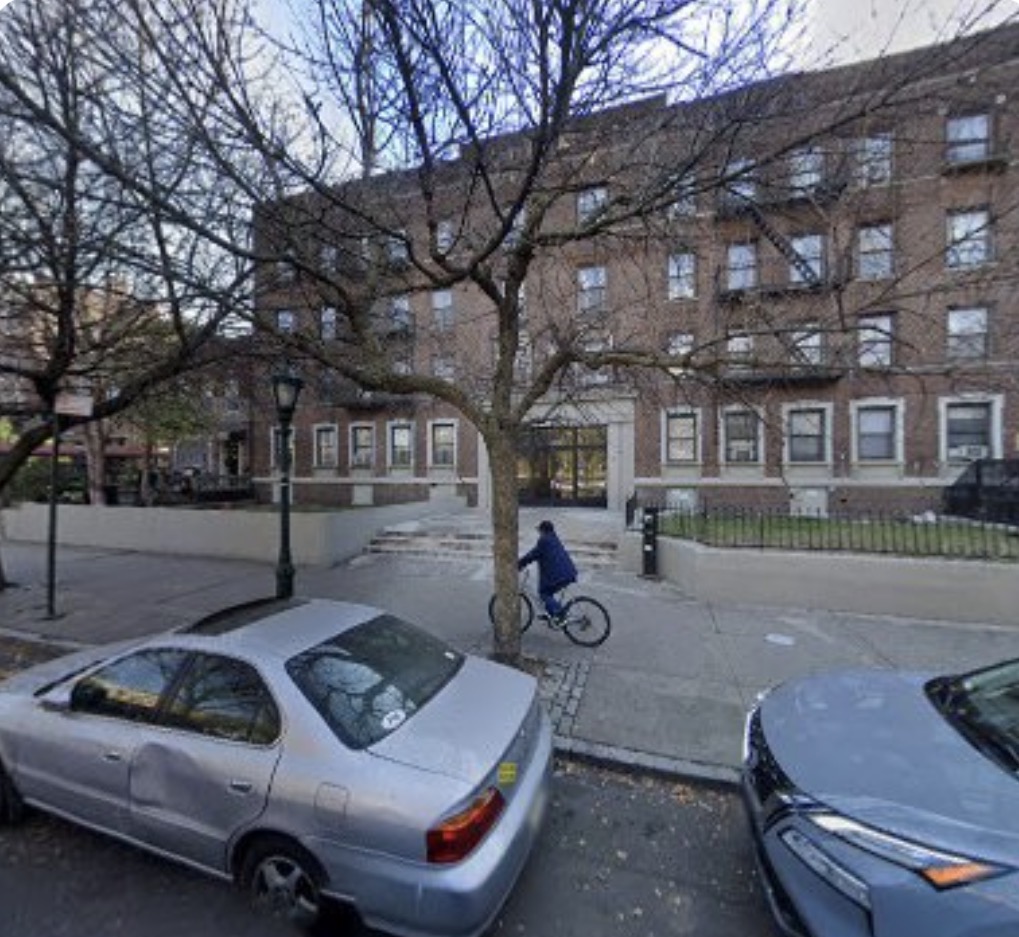

In the late 1990s, Mariah Carey tried to buy Barbra Streisand's penthouse duplex at the Ardsley — 320 Central Park West, an Emery Roth co-op on the Upper West Side. She offered $8 million cash. The co-op board rejected her — reportedly over her "flamboyant celebrity image" and concerns that she'd disrupt the building's family-oriented atmosphere. Streisand's apartment went to someone else. Carey went downtown.
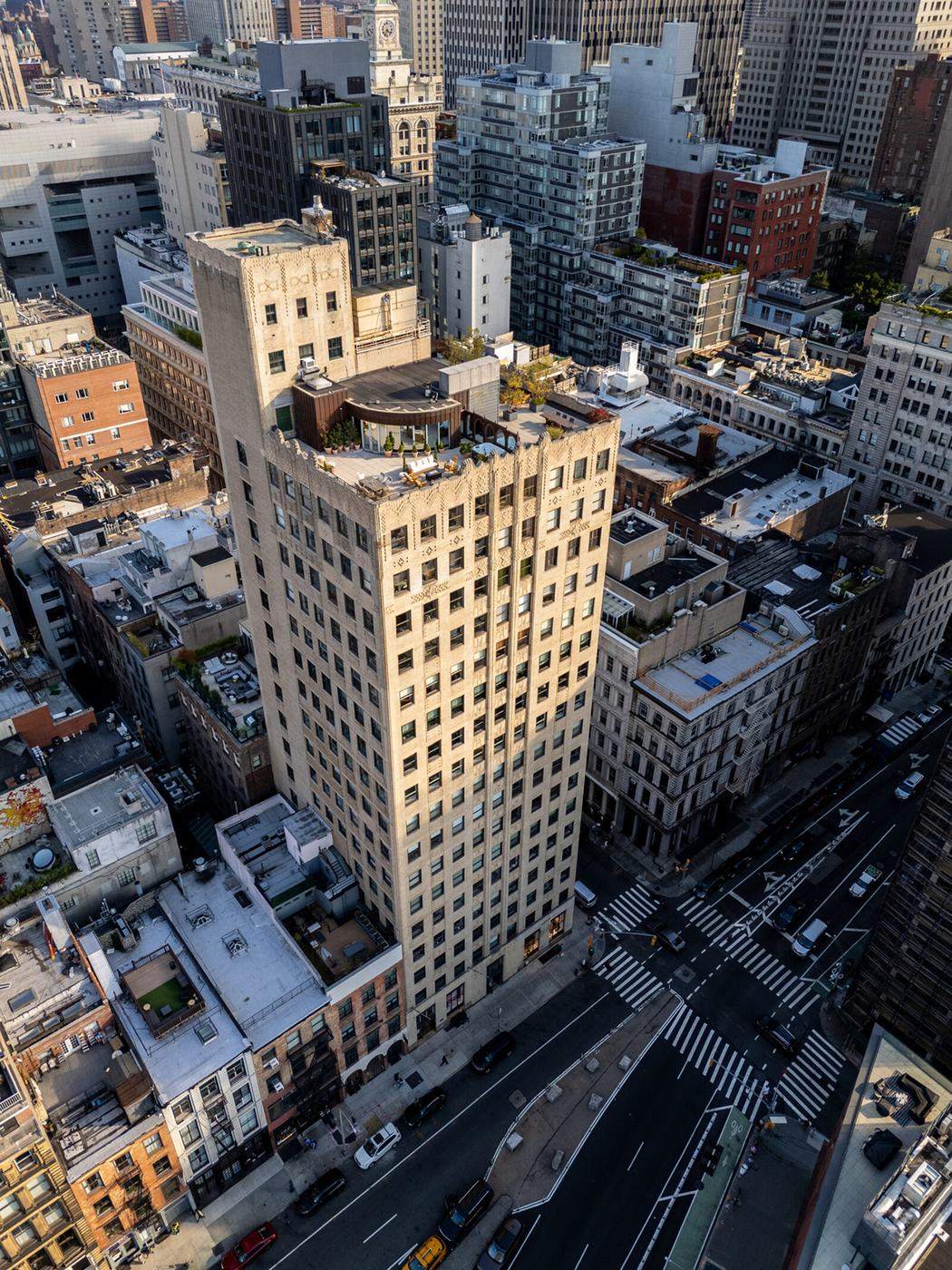
She settled on the top floors of a former Corn Exchange Bank in Tribeca — a 1931 art deco tower that had just been converted from offices to a residential condominium. The sponsor selling units was called Corn Associates LLC. Through 1999 and into the first half of 2000, Corn Associates sold units individually to named buyers: Bob Vila took Unit 14 in December 1999 for a price the public record didn't capture. Other owners arrived through the spring. Corn Associates was working through its inventory.
On June 30, 2000, a single deed transferred the top floors of 90 Franklin Street — Block 175, Lot 1327, recorded as "entire" — from Corn Associates LLC to a newly formed entity called Franklin Views, LLC, for approximately $9 million. The deed was filed c/o Ronald E. Nash at 1330 Sixth Avenue, 6th Floor, a Manhattan law office address.
Franklin Views, LLC had no public connection to Mariah Carey. The name was descriptive — after the view from the windows. No celebrity attribution, no initials, nothing a casual search of the deed would flag.
Mariah Carey's name appears nowhere on it. She has lived there for 26 years.
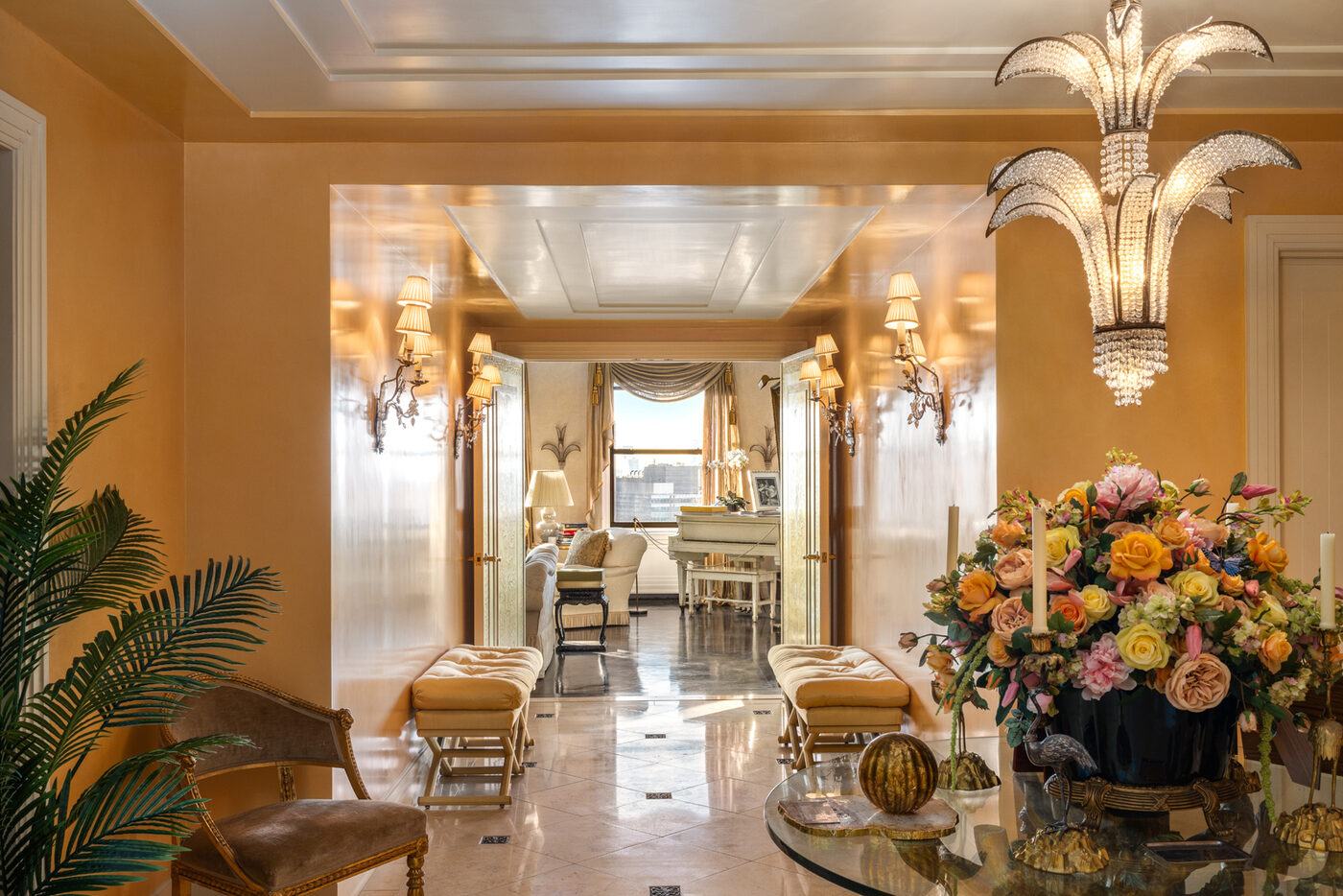
She brought in Mario Buatta — the "Prince of Chintz," designer of some of the most photographed interiors of the last century — to transform the raw space. There are butterflies on the cabinet handles, on the bed hangings, on the kitchen tiles, even on the soap. Buatta once said: "There are so many butterflies in this apartment, you don't even notice them. But Mariah does." Marilyn Monroe's childhood white baby grand piano sits in the great room. There is a 38-foot bathroom she calls her "ladies lounge" and a shoe room with her initials inlaid in gold leaf on the bleachwood floor.
She is now listing it for $27 million.
Type "Mariah Carey" into any New York City property database and you'll find zero results at 90 Franklin Street. The triplex she's owned since 2000, refinanced four times, and is now listing for $27 million has her name on none of the public deeds. The deed is Franklin Views, LLC.
That's an LLC, and we got curious.
Everyone knows Mariah Carey's apartment. Coverage has been everywhere — the butterflies, the Monroe piano, the Buatta interior. The one detail the coverage couldn't prove was the deed. We went to the public record to check. Franklin Views, LLC's mortgage chain — every date, every lender, every consolidation — matches Mariah Carey's public borrowing history to the dollar.
Here is what the record shows, under Franklin Views, LLC, on 90 Franklin Street:
- June 30, 2000 — Deed from Corn Associates LLC transferring the triplex (Lot 1327). Approximately $9 million cash.
- February 20, 2009 — First mortgage. $8,000,000 from JPMorgan Chase Bank, N.A. Nine years after the purchase, Franklin Views, LLC borrowed against the property for the first time.
- June 26, 2015 — Second mortgage. $2,600,000 from City National Bank, the so-called "Bank to the Stars" that handles high-end entertainment-industry lending out of Los Angeles.
- August 3, 2016 — Two documents filed the same day. A new mortgage of $9,622,798 from JPMorgan Chase, and a consolidating agreement rolling it together with the 2009 balance into a single mortgage of $17,600,000. A cash-out refinance. Franklin Views, LLC extracted roughly $9.6 million in equity.
- October 3, 2016 — The City National Bank loan was satisfied and released.
- April 23, 2018 — Another same-day pair. A gap mortgage of $1,022,478.78 from JPMorgan Chase, consolidated with existing debt into a new total of $18,600,000.
- 2026 — The triplex is listed for $27 million. The $18.6 million JPMorgan debt remains outstanding.
Buy in 2000 for $9 million cash. Sit for nine years, then borrow against the appreciation and refinance every three to five years, pulling equity at each step. List in 2026 for $27 million against $18.6 million in outstanding debt, for a net of roughly $8.4 million before sales costs. None of it is hidden. The only thing obscured is who is executing the playbook.
Shell LLCs named after the view or the street. Closing attorneys as the address of record. Mortgages in the LLC's name, not the owner's. Every one of the 800,000 buildings in New York carries some version of this paperwork.
The shell-company structure that keeps Carey's name off the Tribeca deed is the same structure most New York landlords use to keep their names off the leases their tenants sign. The LLC on your lease is almost always named after your address — 143 West 72nd LLC, 2070 Vyse LLC. Behind that is usually a family name, a management company, sometimes a trust. Sometimes three or four of those stacked. The person who decides whether your heat gets fixed is somewhere back there, and figuring out who is a small research project every time.
On Brix, 90 Franklin Street — BBL 1001757504 — scores B+ (84/100). Zero open HPD violations. Zero Class C hazardous violations. Zero 311 complaints in the last twelve months. Ten of thirteen health checks clean. The only yellow flags are $14 in unpaid ECB fines and a routine "recent ownership transfer" note — standard in a condo where single-unit LLCs turn over regularly. If you were about to spend $27 million on this triplex, the public record is not your reason to hesitate.
Every New York building has a record. Every landlord, every co-op, every condo, every townhouse.
The Ardsley could reject Carey in the first place because that's what co-op boards can do. New York City co-ops aren't real estate in the ordinary sense. You don't buy an apartment, you buy shares in the corporation that owns the building, and the board of that corporation gets to approve or reject every new shareholder. No reasons required. Tribeca condos are structured differently — a condo buyer actually owns their unit, and the building can't veto the sale. That's part of why Carey went downtown.
The system she used to enter Tribeca is the same system most New York real estate passes through.