We read New York City deed records every day. Most transfers are ordinary: a sale, a refinance, a parent adding a child to the title. A handful are not, and the ones that aren't tend to look the same.
Deed theft works like this. Someone forges a homeowner's signature on a deed transferring the property to themselves or to an LLC they control. They get it notarized — sometimes by a real notary who doesn't ask questions, sometimes with a stamp that's been faked outright. They file it with the City Register. The Register records it.
That's the entire crime. The city's property record verifies nothing. Nobody calls the homeowner. If the paperwork looks right, it gets recorded, and a stolen deed sits in the file looking exactly like a legitimate one.
Complaints to the state Attorney General's office went from 149 in 2023 to 517 in 2025. More than 3,500 were filed in the city between 2013 and 2023, concentrated in Brooklyn and Queens. The pattern is consistent: historically Black neighborhoods where homes are owned outright by older residents and values have risen sharply — Bedford-Stuyvesant, Crown Heights, Southeast Queens, parts of Harlem.
Here are the seven things worth looking for, in the order we'd look for them.
A transfer you don't recognize
Start with the deed history on your own property. Every recorded document is public, and you can read the whole chain in a few minutes.
What you're looking for is simple: a transfer out of your name, or out of a relative's name, that nobody in the family authorized. It is not subtle once you see it. The difficulty is that almost nobody looks.
The Brooklyn District Attorney's office has obtained 30 indictments against 42 defendants since 2017, involving more than 70 properties. Every case that has gone to verdict has ended in conviction. Nearly all of them were discovered late.
What to do now: pull your own deed history once a year. Free, ten minutes, and the only step that catches this early.
A sale price of zero or one dollar
Legitimate one-dollar transfers exist — a parent moving a house into a family trust, a divorce settlement, a corporate reorganization.
They are also the standard shape of a forged deed, because a thief filing paperwork has no interest in generating a real sale price or a real transfer-tax bill.
The tell isn't the dollar amount by itself. It's a dollar amount that doesn't correspond to anything the family did.
What to do now: if a nominal transfer appears in your chain and no one in your family arranged it, treat it as urgent, not clerical.
An LLC you've never heard of
The buyer on a fraudulent deed is usually a company formed weeks earlier for this one purpose. It has a generic name, no history, and an address that isn't the house.
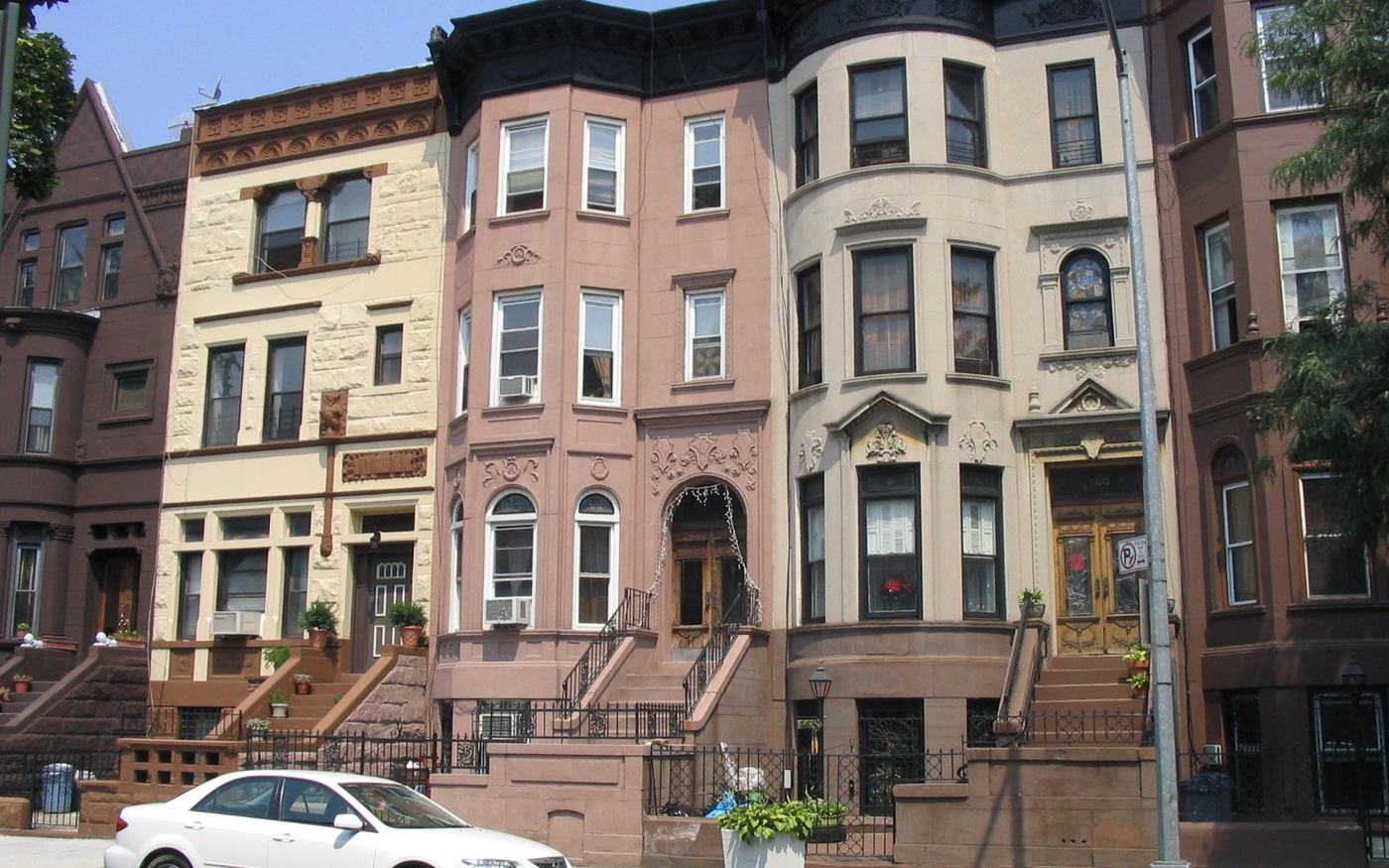
In one Bedford-Stuyvesant case, a brownstone a family had owned for 60 years was recorded as sold to an LLC for $1.4 million, executed by an out-of-state conservator appointed over the elderly owner. The family says the sale was unauthorized. The Attorney General's office has said the dispute emanated from deed theft. A council member was arrested in April 2026 trying to physically block the eviction.
The company on the deed is often younger than the fraud it was created to hold.
What to do now: look up the buyer entity. If it was formed shortly before the transfer, that's worth a lawyer's time.
A transfer dated just after a death in the family
Inherited property is the softest target in the system. The owner of record can no longer contest anything, heirs are often scattered, and the estate can sit unsettled for years.
Transfers filed in the months after a death — especially involving someone presented as a conservator, a helper, or an heir nobody in the family recognizes — are the second most common shape we see.
What to do now: when a relative who owned property dies, check the deed history within the year. Do it before the estate closes, not after.
A mortgage you didn't take out
Once a thief holds the deed on paper, they can borrow against the house. This is often the point of the exercise: the money comes out as a loan, the loan goes into default, and the foreclosure lands on the real owner.
It also makes recovery dramatically harder. Every additional lien filed against a stolen property adds another party with a claim to unwind.
What to do now: read the liens on your property, not just the deeds. A mortgage in your name that you never signed is a filing you can still fight.
Your property tax bill stops arriving
This is the low-tech version, and it's the one people notice first without knowing what it means.
Changing the mailing address on a property is a routine administrative act. It's also what someone does when they don't want you seeing the bills, the notices, or the eviction filing.
Mail is the last thing that tells you the record has changed. Don't let it go quiet.
What to do now: if your tax bill or city correspondence stops showing up, confirm the mailing address on file before you assume it's the post office.
Someone offering to "help" with a foreclosure
The most damaging cases aren't cold forgeries. They're arranged in person, by someone the owner trusted.
In June 2025, a Brooklyn jury convicted a 68-year-old disbarred attorney on 17 charges connected to the theft of 11 Brooklyn homes. Between 2012 and 2022 he approached homeowners in financial distress — primarily minority homeowners facing foreclosure — and offered to negotiate short sales for them. Instead he transferred the deeds to himself or to corporations he controlled, then collected rent for years while the owners' credit was destroyed by foreclosures that were never resolved. The homes were in Bedford-Stuyvesant, East Flatbush, Canarsie, East New York, and Ocean Hill. He was sentenced in November 2025 to two and a half to seven years.
He collected nearly $500,000 in rent on the stolen homes. He was not ordered to pay it back.
What to do now: never sign a document that transfers title as part of a rescue plan. Any real foreclosure help leaves your name on the deed.
Two things to do this week
Read your deed history. Search your property in ACRIS by address or by borough, block, and lot — the BBL is on any recent property tax bill. Staten Island records live with the Richmond County Clerk. Brix shows the same recorded transfers on a building's page, alongside the entity chain behind each one.
Sign up for recording notifications. The Department of Finance will email or mail you any time a deed, mortgage, or related document is recorded against your property. It won't stop a fraudulent filing; it tells you the day one happens. Available in eleven languages, and you can designate a family member to receive the alerts — which matters for elderly owners. Register at the city's deed-fraud page.
Read the recorded transfers on your property
Search your address to see every deed on file, the date each was recorded, and the entity chain behind it.
If the name on the most recent transfer means nothing to you, who owns my building traces it back through the LLCs.
If you think it has already happened
Contact your borough District Attorney's real estate fraud unit — in Brooklyn, the Action Center at 718-250-2340. File a complaint with the New York Attorney General's office. Get a real estate attorney experienced in deed fraud; Access Justice Brooklyn and other legal aid organizations represent low-income homeowners for free.
Move quickly. Every additional transfer or mortgage recorded on the property makes it harder to unwind.
In April 2026 the city created an Office of Deed Theft Prevention inside the Department of Finance, tasked with flagging suspicious filings before they're recorded. It's funded at $1 million in its first year. Whether it works depends entirely on whether it can act before a deed is recorded rather than after — because once a fraudulent deed is in the record, getting the house back means a civil lawsuit that can run years and tens of thousands of dollars.
Checking your own deed costs nothing.